
Summary
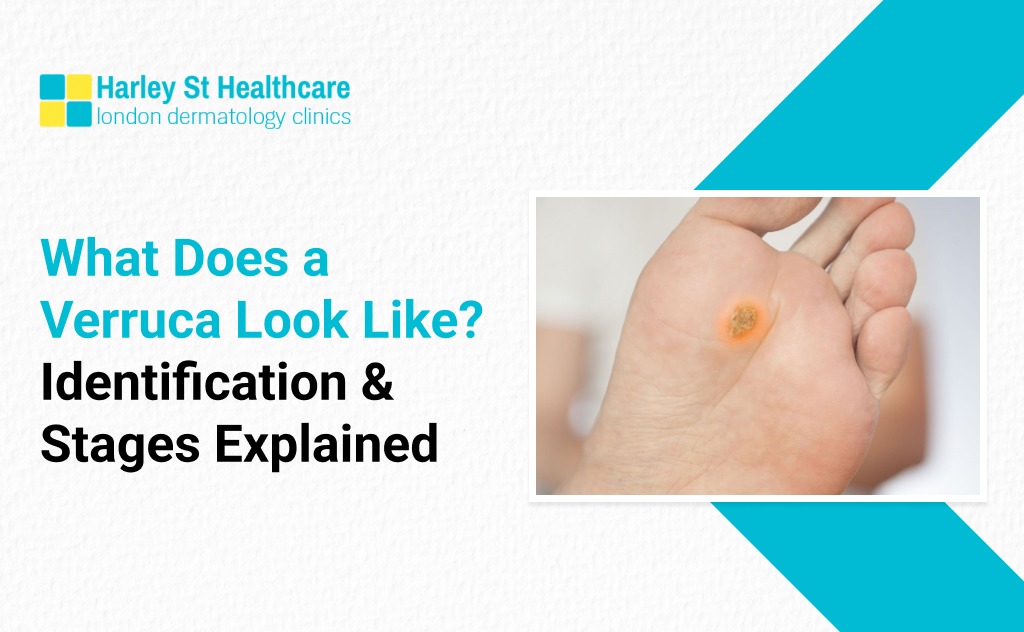
A verruca appears as a small, rough patch on the foot with tiny black dots and broken skin lines. As it develops, it becomes thicker, more painful, and may spread into clusters. Early identification helps prevent deeper growth and speeds up treatment.
Introduction
Not every rough patch on your foot is just hard skin. Many people ignore early signs of verrucas, assuming they are minor calluses until they become painful.
The challenge is that verrucas don’t look the same at every stage. What starts as a small, barely noticeable spot can gradually develop into a deeper, uncomfortable lesion that affects daily walking.
In this guide, you’ll learn:
- What a verruca looks like at each stage
- How to identify it correctly
- What conditions can be mistaken for a verruca
- When to take action
What Does a Verruca Look Like? Key Signs to Identify
A verruca has several distinct visual and physical features that make it different from other foot conditions.
Common Verruca Features
- Rough, grainy surface
- Tiny black dots (clotted blood vessels)
- Flat appearance due to pressure from walking
- Disrupted or broken skin lines
- Pain when squeezed from the sides
Unlike corns or calluses, verrucas interrupt natural skin lines one of the easiest ways to identify them.
How Does a Verruca Look When It Starts? (Early Stage Verruca Signs)
In the beginning, verrucas are easy to overlook.
Early Stage Verruca Signs
- Small, flat patch of thickened skin
- Slight roughness (similar to dry skin)
- Skin lines begin to break
- Usually painless at first
- Tiny dark pinpoints may appear
At this stage, many people confuse it with a callus or minor skin irritation.
Why early detection matters:
Treatment is most effective at this stage before the verruca grows deeper into the skin.
What Do Verruca Stages Look Like? (Visual Signs Explained)
Even without images, verruca stages can be identified based on how they appear over time:
- Early stage: Small, subtle rough patch
- Growth stage: Thickened skin with visible black dots
- Mature stage: Larger, more painful lesion or cluster
- Healing stage: Darkening, shrinking, and peeling skin
Understanding these visual changes helps you recognise progression early and act accordingly.
Stages of Verruca: From Early to Healing
Knowing the stages of verruca helps you understand how the condition progresses and when to seek treatment.
Stage 1: Early Formation
- Small rough patch
- Minimal or no pain
- Slight skin thickening
This is the best stage for early treatment.
Stage 2: Growth & Deep Rooting
- Verruca increases in size
- Begins embedding deeper into the skin
- Pain increases (feels like stepping on a pebble)
- Black dots become more visible
At this stage, home treatments may take longer to work.
Stage 3: Mature Verruca
- Thick, well-defined lesion
- May form clusters (mosaic verrucae)
- Increased pain while walking
- More contagious
Professional treatment is often required at this stage.
Stage 4: Dying / Healing Stage
- Verruca shrinks and darkens
- Skin becomes dry and flaky
- Pain gradually reduces
- Dead tissue starts peeling
This indicates your immune system is fighting the infection.
How to Identify a Verruca vs Other Skin Conditions
Many conditions look similar, but correct identification is essential for proper treatment.
Verruca vs Corn
- Verruca: Pain when squeezed from the sides
- Corn: Pain when pressed directly
- Verruca: Black dots present
- Corn: No black dots
Verruca vs Callus
- Verruca: Small, localised lesion
- Callus: Larger, flat thickened area
- Verruca: Breaks skin lines
- Callus: Skin lines remain intact
Verruca vs Athlete’s Foot
- Verruca: Raised growth with black dots
- Athlete’s foot: Red, itchy, flaky skin
If you’re unsure, a professional diagnosis is recommended.
How Do You Know If a Verruca Is Deep?
A deep verruca usually shows more advanced symptoms:
- Sharp pain when walking
- Thick layers of hardened skin
- Feels embedded beneath the surface
- Resistant to home treatments
Deep verrucas often require professional removal.
Is a Verruca Painful to Walk On?
Yes, especially in later stages.
Pain may feel like:
- Stepping on a small stone
- Pressure discomfort on weight-bearing areas
- Increased pain when standing for long periods
The level of pain depends on size, depth, and location.
What Conditions Can Be Mistaken for a Verruca?
Misidentification is common.
Common Lookalike Conditions
- Corns
- Calluses
- Blisters
- Fungal infections (athlete’s foot)
- Other skin growths (rare cases)
Correct diagnosis ensures effective treatment.
How Long Do Verruca Stages Last? (Timeline Explained)
There is no fixed timeline, as it varies from person to person.
- Early stage: A few weeks
- Growth stage: Several months
- Mature stage: Can last years if untreated
- Healing stage: Weeks after treatment or immune response
Some verrucas go away naturally, but many persist without treatment.
When Should You Seek Treatment?
You should consider professional care if:
- The verruca is painful
- It is spreading
- No improvement after weeks of treatment
- Multiple verrucas appear
- You have diabetes or a weakened immune system
Early treatment prevents complications and speeds up recovery.
Professional Verruca Assessment & Care
For persistent or painful verrucas, professional evaluation offers safer and faster results.
Specialist care at London Dermatology Clinics includes:
- Accurate diagnosis
- Stage-based treatment planning
- Advanced removal techniques
- Reduced risk of recurrence
If you’re searching for reliable verruca treatment near you, booking a consultation with London Dermatology Clinics can help you achieve faster and more effective results.
Conclusion
Verrucas change over time, progressing through different stages that can make them more noticeable and uncomfortable.
Recognising early signs such as rough skin, tiny black dots, and broken skin lines can help you act early and avoid complications.
While some verrucas may go away on their own, many persist or spread if ignored. If your verruca becomes painful, deep, or stubborn, seeking professional advice is the safest and most effective next step.
FAQ’s
It appears as a small, rough patch of skin with slight thickening and disrupted skin lines, often painless initially.
Early formation, growth and rooting, mature stage, and healing/dying stage.
Look for black dots, rough texture, broken skin lines, and pain when squeezed from the sides.
Corns, calluses, and fungal infections are commonly confused with verrucas.
If it causes sharp pain, feels embedded, and doesn’t respond to home treatment, it is likely deep.
Yes, especially when located on pressure points like the heel or ball of the foot.
