
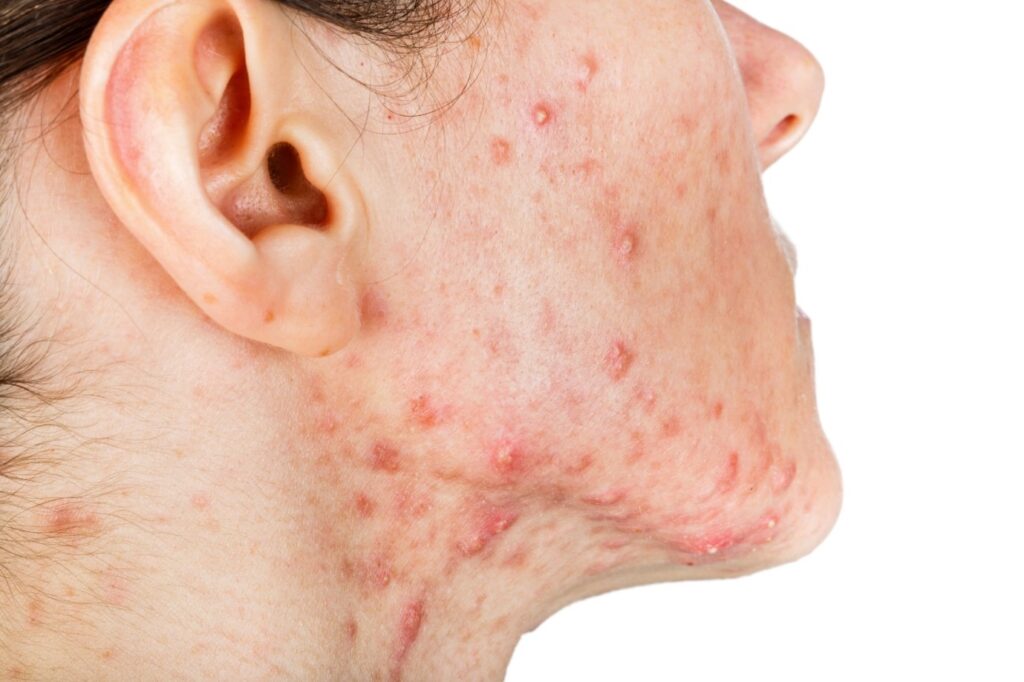
Learn what cystic acne is, why it forms, how to manage painful under-the-skin cystic pimples, and the most effective dermatologist-approved treatments.
Introduction
Cystic acne is one of the most severe forms of acne, characterised by deep, painful, under-the-skin bumps that often lead to scarring. Unlike normal spots, cystic acne forms when inflammation spreads deeper into the skin, creating swollen cysts that are difficult to treat at home.
This guide explains what cystic acne is, the main causes, how it develops, how to manage cystic acne safely, and the most effective treatment options available today.
You’ll also learn how dermatologists diagnose and treat cystic pimples under the skin using advanced, medical-grade approaches.
If you’re struggling with painful cysts, frequent flare-ups, or acne scarring, book a consultation at Harley Street Healthcare, London Dermatology Clinic for expert treatment.
Table of Contents
What Is Cystic Acne?
Cystic Acne Causes
How Cystic Acne Develops
Key Symptoms of Cystic Acne
Why Cystic Acne Requires Professional Treatment
Cystic Acne Treatment Options
At-Home Management Tips
Lifestyle Factors That Worsen Cystic Acne
Comparison: At-Home vs Clinical Treatments
How to Choose the Right Treatment
Dermatologist Tips
Step-by-Step Cystic Acne Care Routine
FAQs
Conclusion
What Is Cystic Acne?
Cystic acne is a severe, inflammatory type of acne where deep cysts form underneath the skin. These cysts are filled with pus, bacteria, and oil, but sit so deep that they rarely come to the surface.
Simple analogy:
Think of cystic acne as a “sealed infection” trapped inside the skin, painful, swollen, and slow to heal.
Key attributes:
- Deeper than whiteheads or blackheads
- Often painful
- High risk of scarring
- Typically long-lasting without treatment
Cystic Acne Causes
Cystic acne forms when several factors combine:
- Excess oil (sebum) production
- Clogged pores
- Bacterial overgrowth (C. acnes)
- Hormonal fluctuations
- Overactive inflammatory response
- Genetics and family history
Triggers include:
stress, puberty, menstrual cycles, high-sugar diets, certain medications, and using comedogenic skincare products.
What Causes Cystic Acne?
Cystic acne develops due to a combination of excess oil production, clogged pores, bacterial growth, and deep skin inflammation. Hormonal changes, particularly during puberty, menstruation, or stress, can increase oil production and trigger cyst formation. Genetics also play a significant role, meaning some individuals are more prone to developing severe acne than others.
How Cystic Acne Develops
Cystic pimples under the skin form through a multi-step process:
- Pore blockage
Dead skin and oil trap bacteria inside the follicle. - Inflammation spreads deeper
As bacteria multiply, inflammation penetrates the deeper dermal layers. - Cyst formation
A painful, swollen lump develops and remains trapped beneath the skin. - Scar formation
Because cysts damage the deeper layers, scarring is common.
Key Symptoms of Cystic Acne
You may have cystic acne if you experience:
- Large, painful bumps under the skin
- Red or swollen nodules
- Cysts that last weeks or months
- Tenderness when touched
- Clusters of deep spots on jawline, chin, back, or chest
Frequent scarring after breakouts
Why Cystic Acne Requires Professional Treatment
Unlike superficial acne, cystic acne does not respond well to over-the-counter products.
Deep inflammation requires prescription medication or clinical treatment.
If ignored, cystic acne can lead to:
- Permanent scarring
- Skin texture changes
- Hyperpigmentation
- Painful flare-ups
- Emotional distress
Dermatologist intervention is the safest and most effective approach.
Cystic Acne Treatment Options
Dermatologists use targeted, medical-grade treatments to control cystic acne:
Prescription Treatments
- Oral antibiotics – reduce inflammation and bacteria
- Topical retinoids – prevent clogged pores
- Hormonal therapy (for women) – regulates hormonal acne
- Isotretinoin – most effective option for severe, resistant cystic acne
In-Clinic Procedures
- Cortisone injections – rapidly flatten painful cysts
- Chemical peels – exfoliate and clear pores
- Laser therapy – reduces bacteria and scarring
- Blue light therapy – kills acne-causing bacteria
- Microneedling – treats scars caused by cystic acne
How Do You Treat Cystic Acne Effectively?
Treating cystic acne usually requires a combination of prescription medication and targeted therapies. Dermatologists may use oral medications to reduce inflammation, topical treatments to prevent clogged pores, and in-clinic procedures to manage severe breakouts. Over-the-counter products alone are often not sufficient for deep cystic acne, which is why professional treatment is recommended for long-term control.
At-Home Management Tips
While home care cannot cure cystic acne, it can reduce flare-ups:
- Use a gentle, non-comedogenic cleanser
- Apply salicylic acid 2–3 times a week
- Use benzoyl peroxide to reduce bacteria
- Apply ice to reduce swelling
- Avoid picking (prevents scarring)
- Use oil-free makeup and skincare
- Change pillowcases regularly
Does Cystic Acne Go Away on Its Own?
Cystic acne may improve over time, but it rarely resolves completely without proper treatment. Because the inflammation occurs deep beneath the skin, untreated cysts can persist, worsen, or lead to permanent scarring. Early intervention significantly improves outcomes and reduces long-term skin damage.
Lifestyle Factors That Worsen Cystic Acne
Common contributors:
- High-glycemic diets (sugar, white carbs)
- Dairy consumption (for some individuals)
- Hormonal changes
- Stress and poor sleep
- Heavy makeup
- Over-exfoliation
- Humidity and sweating
How Long Does Cystic Acne Last?
Individual cystic acne lesions can last for several weeks, while recurring breakouts may continue for months or even years if not properly treated. With the right dermatological care, inflammation can be controlled more quickly, reducing both the duration and severity of acne episodes.
Comparison: At-Home vs Clinical Treatments
| Factor | At-Home Methods | Clinical Treatments |
| Speed | Slow | Fast results (1–4 weeks) |
| Effectiveness | Mild | Moderate to strong |
| Best For | Mild inflammation | Moderate–severe cystic acne |
| Cost | Low | Medium to high |
| Drawback | Limited improvement | Requires a dermatologist’s care |
How to Choose the Right Treatment
Consider:
- Severity of acne (mild vs persistent cysts)
- Frequency of breakouts
- Presence of scarring
- Hormonal triggers
- Skin sensitivity
- Previous treatment attempts
- Budget and downtime
If cysts are recurring or painful, prescription treatment is recommended.
Dermatologist Tips for Managing Cystic Acne
- Never pop or squeeze cysts
- Avoid harsh scrubs
- Apply retinoids consistently
- Use oil-free, non-comedogenic products
- Keep your hands away from your face
- Reduce sugar and dairy intake
- Manage stress with routines that calm inflammation
- Stick to your prescribed plan — acne needs consistency
Step-by-Step Cystic Acne Care Routine
Morning Routine
- Gentle cleanser
- Salicylic acid toner/serum
- Oil-free moisturiser
- SPF 30–50 non-comedogenic sunscreen
Night Routine
- Cleanser
- Retinoid (prescription or over-the-counter)
- Benzoyl peroxide (optional, alternate nights)
- Lightweight moisturiser
Weekly
- Use a clay mask once a week
- Avoid over-exfoliation
When Should You See a Dermatologist for Cystic Acne?
You should consider seeing a dermatologist if your acne is painful, persistent, or leaving marks and scars. If over-the-counter treatments are not improving your condition, professional care can help prevent long-term damage. Early treatment is especially important for cystic acne, as it reduces the risk of permanent scarring and improves overall skin health outcomes.
Conclusion
Cystic acne is painful, persistent, and often leaves scars, but with the right approach, it can be effectively treated. Understanding the causes and using proven treatments, especially dermatologist-guided therapies, can help you achieve clearer, healthier skin.
If you’re struggling with deep cysts or acne scarring, book an appointment at Harley Street Healthcare, London Dermatology Clinic for tailored cystic acne treatment and expert care.
FAQ’s
What causes cystic acne?
Hormones, excess oil, clogged pores, genetics, and deep inflammation.
How do I treat cystic pimples under the skin?
Prescription treatments, cortisone injections, and dermatology-guided therapies are most effective.
Will cystic acne go away on its own?
Cystic acne may improve slightly over time, but it usually does not fully resolve without treatment and can lead to scarring if left unmanaged.
What is the best cystic acne treatment?
Isotretinoin, hormonal therapy (in women), prescription retinoids, and in-clinic procedures.
Can diet affect cystic acne?
Yes, high sugar, dairy, and processed foods may worsen inflammation.
Why is cystic acne so painful?
Cystic acne is painful because inflammation occurs deep under the skin, affecting surrounding tissue and causing pressure and swelling.
Can cystic acne cause permanent scars?
Yes, cystic acne has a high risk of scarring due to deep skin damage, especially if not treated early or if cysts are squeezed.
Is cystic acne hormonal?
Hormones are one of the most common triggers, particularly during puberty, menstrual cycles, and periods of high stress.
