
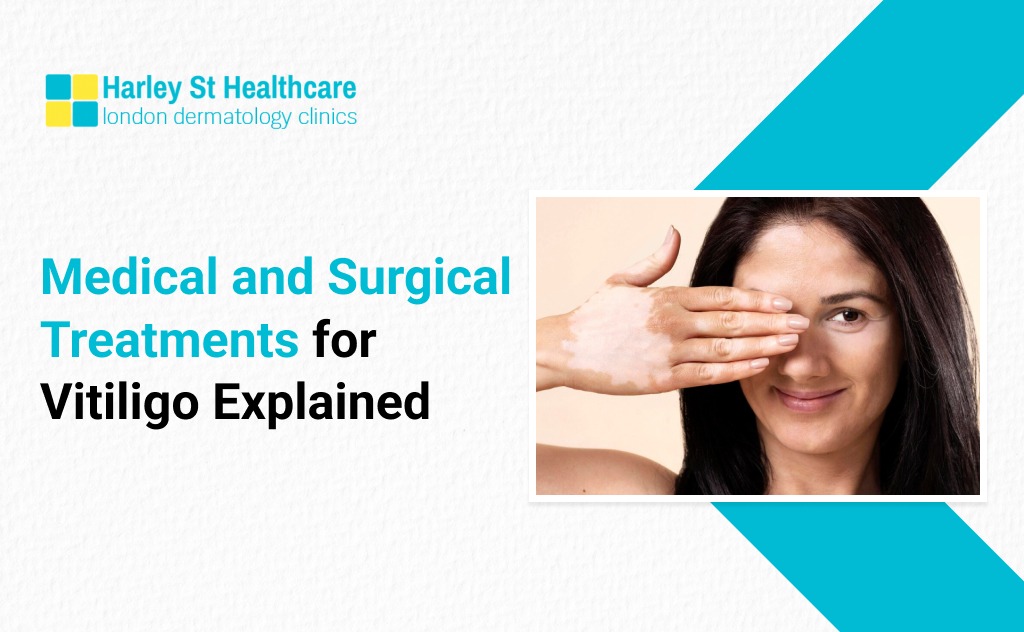
Vitiligo is a long-term autoimmune skin condition that causes areas of pigment loss, leading to clearly defined white patches on the skin. While vitiligo is not physically harmful, it can have a significant emotional and psychological impact, which is why many people seek professional vitiligo treatment to help stabilise the condition and encourage repigmentation.
Modern dermatology offers structured medical and surgical options designed to stabilise the condition and encourage repigmentation where possible.
Although vitiligo cannot always be permanently cured, many patients achieve meaningful improvement with the right specialist guidance.
What Is Vitiligo?
Vitiligo occurs when melanocytes, the cells responsible for producing pigment — are damaged or destroyed. This leads to white patches that may gradually spread.
Vitiligo commonly affects:
- Face
- Hands
- Around the mouth or eyes
- Scalp
- Body folds
The condition may remain stable for years or progress slowly over time. Early assessment improves treatment outcomes.
When Should You Seek Vitiligo Treatment?
You should consider seeing a dermatologist if:
- White patches are spreading
- The condition is affecting visible areas
- You feel self-conscious or distressed
- You are unsure whether the diagnosis is vitiligo
A professional assessment helps confirm the diagnosis and determine whether medical or surgical vitiligo treatment is appropriate.
At London Dermatology Clinics, consultant dermatologists assess each case individually and develop personalised treatment plans aligned with UK clinical standards.
Medical Treatment for Vitiligo
Medical therapy is usually the first-line of the treatment in the UK, particularly when the condition is active. Dermatologists often combine vitiligo therapy with other pigmentation treatments for better results.
Topical Corticosteroids
These reduce inflammation and may stimulate repigmentation, especially in early or limited vitiligo.
Topical Calcineurin Inhibitors
Often used for sensitive areas such as the face and neck, particularly for long-term maintenance.
Narrowband UVB Phototherapy
One of the most evidence-based treatments for widespread vitiligo.
Benefits include:
- Stimulation of melanocyte activity
- Gradual repigmentation over time
- Suitable for many adults and adolescents
Treatment typically requires regular sessions over several months.
Targeted Light Therapy (Excimer)
Used for localised patches and specific areas.
What Is Vitiligo Repigmentation Treatment?
Vitiligo repigmentation treatment refers to therapies aimed at restoring pigment to affected areas.
Results depend on:
- Stability of vitiligo
- Location of patches
- Duration of the condition
- Individual response to therapy
Repigmentation often begins around hair follicles and spreads gradually. Patience and consistency are essential.
Surgical Treatment for Vitiligo
Surgical options are considered only when vitiligo has remained stable (no progression) for at least 6–12 months.
Dermatologists perform various skin surgeries to address stable conditions safely.
These procedures are available in London clinics under experienced dermatologists.
Skin Grafting
Small sections of normally pigmented skin are transplanted into depigmented areas.
Melanocyte Transplantation
Pigment cells are harvested, processed, and transferred to affected areas to encourage repigmentation.
Surgical treatment is not suitable for everyone and requires careful evaluation to ensure realistic expectations.
NHS vs Private Vitiligo Treatment in the UK
NHS Pathway
- Requires GP referral
- Longer waiting times in many areas
- Access to phototherapy services
Private Dermatology Clinics
- Faster access to consultant dermatologists
- Longer consultation times
- Personalised treatment combinations
Both routes follow evidence-based dermatology guidance. The choice depends on urgency and personal preference.
Is Vitiligo Treatment Safe?
When supervised by a GMC-registered consultant dermatologist, vitiligo treatment searches should lead to safe and structured care.
Potential concerns include:
- Long-term steroid use
- UV exposure risks
- Surgical suitability
These are carefully assessed before any treatment is recommended.
What Results Can You Realistically Expect?
The treatment requires patience and consistency.
Typical timeline:
- Weeks 4–8: Early pigment changes may appear
- Months 3–6: Visible repigmentation in responsive areas
- 6–12 months: Maximum improvement for many patients
Some areas, such as hands and feet, may respond more slowly.
Treatment focuses on improvement and stabilization rather than instant or guaranteed cures.
How to Choose the Best Vitiligo Treatment
Before booking, consider:
- Is the clinic consultant-led?
- Are dermatologists GMC registered?
- Do they explain risks and expectations clearly?
- Do they offer both medical and surgical options?
- Is long-term follow-up available?
Choosing a clinic with structured follow-up ensures safer and more effective management of vitiligo.
The best treatment should prioritize safety, evidence-based care, and realistic outcomes.
Key Takeaways
- Vitiligo is an autoimmune pigment disorder.
- Early intervention improves repigmentation outcomes.
- Medical therapy is usually first-line treatment.
- Surgical options are suitable only for stable vitiligo.
- Both NHS and private vitiligo treatment UK pathways are valid.
- Realistic expectations are essential for long-term satisfaction.
Summary
If you are searching for vitiligo treatment in London or across the UK, a structured dermatology consultation can provide clarity and direction.
At London Dermatology Clinics, vitiligo is assessed and managed by experienced consultant dermatologists using medical and surgical treatment options where appropriate.
While vitiligo cannot always be permanently cured, modern vitiligo repigmentation treatment approaches can significantly improve appearance and confidence when guided by specialist care.
FAQs
1. Can vitiligo be cured permanently?
Vitiligo cannot always be permanently cured, but it can often be stabilised and improved with appropriate treatment.
2. What is the most effective vitiligo treatment?
Narrowband UVB phototherapy is considered one of the most effective treatments for widespread vitiligo.
3. How long does vitiligo treatment take to work?
Most patients require several months of consistent treatment to see noticeable improvement.
4. Is surgical vitiligo treatment safe?
When vitiligo is stable and the procedure is performed by an experienced dermatologist, surgical treatment is generally safe.
5. Should I see a dermatologist for vitiligo?
Yes. Early specialist assessment improves outcomes and helps prevent unnecessary progression.

