
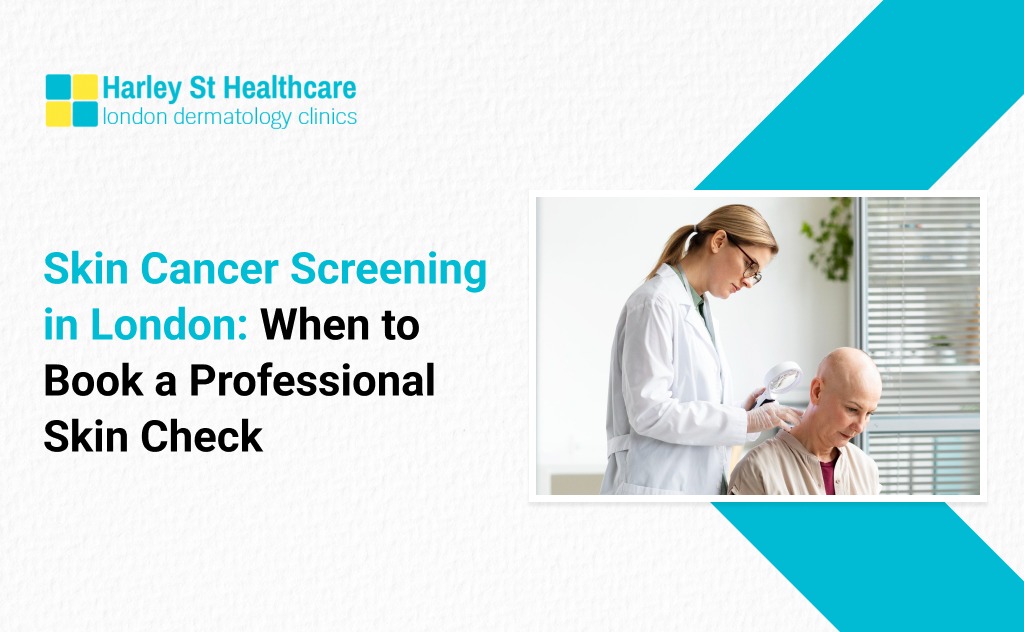
If you are searching for skin cancer screening near me, you may have noticed a changing mole, a new skin lesion, or simply want reassurance. Skin cancer screening is a specialist dermatological assessment designed to detect suspicious moles and lesions at an early stage. Early diagnosis significantly improves treatment outcomes. In London, professional skin cancer checks offer prompt evaluation, dermoscopic examination, and clear next steps if further treatment is required.
What Is Skin Cancer Screening?
Skin cancer screening is a full assessment of the skin performed by a trained dermatologist. The purpose is to identify early signs of:
- Melanoma
- Basal cell carcinoma
- Squamous cell carcinoma
During a skin cancer check in London, dermatologists typically use dermoscopy, a specialised magnified light device that allows detailed examination beneath the surface of the skin. This improves diagnostic accuracy compared to visual inspection alone.
Screening is non-invasive, painless, and usually completed within one consultation.
When Should You Book a Skin Cancer Check?
You should consider booking a skin cancer screening in London if you notice:
- A mole changing in size, shape, or colour
- Irregular or uneven borders
- Multiple colours within one lesion
- Bleeding, crusting, or itching
- A new mole appearing in adulthood
- A sore that does not heal
Even if you are unsure whether a mole is concerning, professional assessment provides clarity and reassurance.
Who Is at Higher Risk of Skin Cancer?
Some individuals benefit from regular skin cancer screening due to increased risk factors:
- Fair skin that burns easily
- History of sunburns
- Large number of moles
- Family history of melanoma
- Previous skin cancer diagnosis
- Frequent sun exposure or tanning bed use
Living in the UK does not eliminate risk. Ultraviolet exposure accumulates over time, even in cloudy climates.
What Happens During a Skin Cancer Screening Appointment?
Many patients feel anxious before their first appointment. Knowing what to expect can help reduce uncertainty.
A typical consultation includes:
Medical History Review
The dermatologist asks about:
- Changes in specific moles
- Personal or family history
- Sun exposure history
Full Skin Examination
A systematic head-to-toe skin check may be performed, especially if multiple moles are present.
Dermoscopic Assessment
Suspicious lesions are examined using dermoscopy for detailed structural analysis.
Discussion of Findings
If a lesion appears benign, reassurance is provided.
If further evaluation is needed, options may include monitoring, photography (mole mapping), or minor surgical biopsy.
Most appointments are straightforward and do not require immediate procedures.
Is Skin Cancer Screening Painful?
A standard skin cancer check is painless.
If a biopsy or mole removal is recommended, local anaesthetic is used. These procedures are typically quick and performed on an outpatient basis.
Why Early Detection Matters
Early detection is critical, particularly for melanoma.
When identified early:
- Treatment is simpler
- Surgical removal is often curative
- Long-term outcomes are significantly improved
Delayed diagnosis can allow deeper skin involvement, which may require more extensive treatment.
This is why patients searching for “skin cancer clinic near me” are often advised not to delay assessment if changes are noticed.
Private Skin Cancer Screening vs NHS Referral
In the UK, suspicious lesions can be assessed through the NHS via GP referral.
However, some patients choose private skin cancer screening in London for:
- Faster appointment availability
- Immediate specialist assessment
- Direct access to dermatology expertise
Both pathways aim to ensure safe and appropriate care. The most important factor is timely evaluation.
How Often Should You Have a Skin Cancer Check?
There is no universal schedule for everyone.
Annual screening may be recommended for high-risk individuals. Others may only require assessment if changes occur.
A dermatologist can advise on an appropriate monitoring plan based on your personal risk profile.
When Should You Seek Urgent Advice?
Seek prompt medical attention if you notice:
- Rapid mole changes over weeks
- Black, irregular, or asymmetric lesions
- Persistent bleeding from a mole
- New pigmented lesions after age 40
Early assessment offers peace of mind — and in rare cases where treatment is needed, improves outcomes significantly.
At London Dermatology Clinics, skin cancer screening consultations are conducted by experienced, GMC-registered dermatology specialists, with a focus on early detection and clear patient guidance.
Final Thoughts
Searching for skin cancer screening London often begins with uncertainty or concern about a mole or skin change. Most moles assessed in clinic are benign. However, identifying the small percentage that require treatment is crucial.
Professional skin cancer checks provide reassurance, accurate diagnosis, and timely intervention when necessary. If you notice a change or simply want peace of mind, booking a consultation is a sensible and proactive step.
FAQs
Private skin cancer screening in London typically ranges from £100 to £250, depending on the clinic and whether further tests like biopsy are required.
Most appointments take around 20–30 minutes, including full skin examination and dermoscopic assessment.
No, you can book a private skin cancer screening directly without a GP referral.
Dermatologists use dermoscopy to closely examine moles, but if there is any doubt, a biopsy may be recommended for confirmation.
Yes, especially if you have risk factors. Early screening helps detect changes before symptoms appear and provides peace of mind.

