
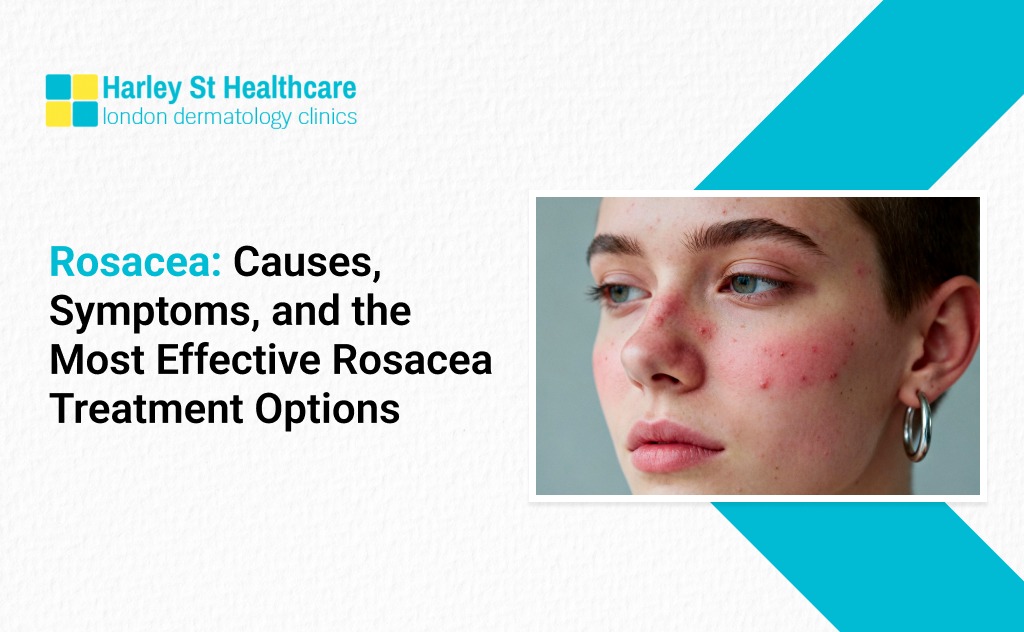
Rosacea is a chronic inflammatory skin condition that primarily affects the face, leading to redness, flushing, visible blood vessels, and sometimes acne-like bumps. Many people worry that rosacea will continue to worsen or that nothing can be done however, with the right dermatological care, rosacea can be effectively managed and controlled. While rosacea cannot be permanently cured, modern dermatology offers proven rosacea treatment options that significantly reduce flare-ups, calm redness, and improve long-term skin health.
What Is Rosacea?
Rosacea most commonly affects the cheeks, nose, chin, and forehead. Early symptoms often include flushing that comes and goes, but over time redness can become more persistent if left untreated.Rosacea typically develops between the ages of 30 and 50 and can affect all skin types, although symptoms may appear more visible on lighter skin tones.
Rosacea Causes: Why Does It Happen?
The exact cause of rosacea is not fully understood, but dermatologists believe it develops due to a combination of factors:
- Overactive immune response in the skin
- Dilated facial blood vessels
- Genetic predisposition
- Skin barrier dysfunction
- Increased sensitivity to Demodex mites in some individuals
Common triggers that may worsen rosacea include:
- Sun exposure
- Hot beverages and spicy foods
- Alcohol
- Stress
- Extreme temperatures
- Harsh or fragranced skincare products
Identifying and avoiding personal triggers is an important part of long-term rosacea management.
How to Get Rid of Rosacea Permanently
Many patients ask: “How to get rid of rosacea permanently?”
From a medical perspective, rosacea cannot be permanently cured, but it can be very well controlled. With consistent treatment and lifestyle adjustments, many patients experience long periods with minimal or no symptoms.
Early diagnosis and appropriate treatment help prevent rosacea from progressing or becoming more difficult to manage.
Rosacea Treatment: What Actually Works?
The most effective rosacea treatment depends on the type and severity of symptoms.
Topical Treatments
Prescription creams and gels help reduce inflammation and redness, including:
- Metronidazole
- Azelaic acid
- Ivermectin
These are commonly used as first-line treatments.
Oral Medication
For moderate to severe rosacea, oral medications may be prescribed to control inflammation and reduce flare-ups.
Laser and Light-Based Treatments
Laser therapy is particularly effective for:
- Persistent facial redness
- Visible blood vessels (thread veins)
These treatments target dilated blood vessels without damaging surrounding skin.
Skincare and Lifestyle Guidance
Gentle skincare is essential:
- Fragrance-free cleansers and moisturisers
- Daily broad-spectrum sunscreen
- Avoiding harsh exfoliants and alcohol-based products
Treatment for Rosacea: What Results Can You Expect?
Rosacea treatment is a long-term management process rather than a quick fix. Most patients notice:
- Reduced redness within weeks
- Fewer flare-ups over time
- Improved skin comfort and confidence
Stopping treatment early often leads to symptom recurrence, so consistency is key.
When Should You See a Dermatologist?
You should seek professional advice if:
- Facial redness is persistent or worsening
- Over-the-counter products are ineffective
- Symptoms are affecting confidence or comfort
- You are unsure whether the condition is rosacea or another skin issue
A dermatologist can confirm the diagnosis and recommend a personalised rosacea treatment plan.
Key Takeaway
Rosacea is a chronic but highly manageable condition. While it cannot be cured permanently, modern rosacea treatments can significantly improve redness, flare-ups, and quality of life when guided by a dermatologist.
FAQs About Rosacea
What causes rosacea?
Rosacea develops due to a combination of genetic factors, immune system overactivity, blood vessel changes, and skin barrier sensitivity. Triggers such as sun exposure, alcohol, and stress can worsen symptoms.
Can rosacea be cured permanently?
No, rosacea cannot be permanently cured. However, with appropriate treatment and trigger management, it can be effectively controlled for long periods.
What is the best rosacea treatment?
The best rosacea treatment depends on symptoms. Options may include topical medication, oral treatment, laser therapy for redness, and tailored skincare routines.
How long does rosacea treatment take to work?
Many patients see improvement within a few weeks, but long-term treatment is needed to maintain results and prevent flare-ups.
Is laser treatment safe for rosacea?
Yes. When performed by an experienced dermatologist, laser treatment is a safe and effective way to reduce redness and visible blood vessels.
Can skincare products make rosacea worse?
Yes. Harsh, fragranced, or alcohol-based products can trigger rosacea flare-ups. Gentle, fragrance-free skincare is recommended.
When should I see a dermatologist for rosacea?
You should see a dermatologist if symptoms persist, worsen, or interfere with daily life. Early treatment helps prevent progression.

