
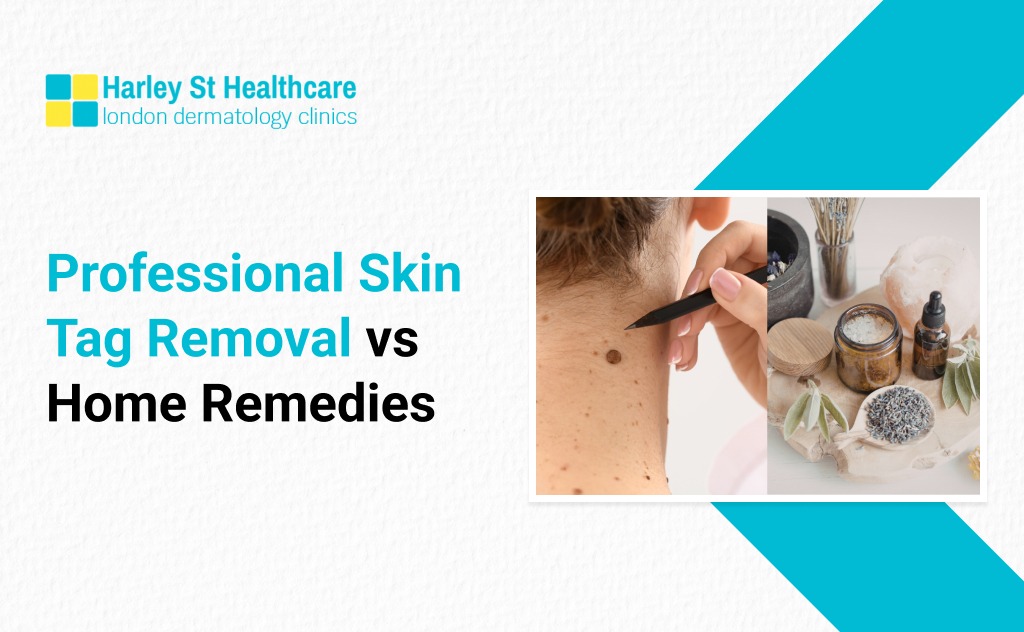
Skin tags are common, harmless skin growths that can appear anywhere on the body. While some people try to remove them at home using creams or DIY methods, professional treatment offers safer and more effective options. This guide compares professional skin tag removal and home remedies, helping you understand the best approach for your skin.
Table of Contents
- What Are Skin Tags?
- Why Consider Removal?
- What Professional Skin Tag Removal Options Are Available?
- How Safe and Effective Are Home Remedies?
- Risks of DIY Skin Tag Removal
- Cost Comparison: Professional vs Home Remedies
- How to Decide Which Method Is Right for You
- Key Takeaways
- Conclusion
- FAQs
What Are Skin Tags?
Skin tags, medically called acrochordons, are small, soft, flesh-colored growths. They often appear in areas where skin folds, such as the neck, underarms, groin, or eyelids. Skin tags are usually painless and harmless, but many people seek removal for cosmetic or practical reasons.
Why Consider Removal?
Patients often consider removing skin tags because:
- They cause irritation when rubbing against clothing or jewelry
- They affect appearance and self-confidence
- Some grow larger over time
While skin tags do not usually indicate serious health problems, persistent irritation or changes in appearance should be checked by a professional.
What Professional Skin Tag Removal Options Are Available?
Professional removal is performed by a dermatologist or trained clinician using safe, controlled methods:
- Cryotherapy: Freezing the tag with liquid nitrogen
- Excision: Cutting the tag off under sterile conditions
- Cautery: Using heat to remove the tag and seal the skin
These methods reduce the risk of infection, scarring, or regrowth. Professionals can also assess whether a growth is actually a skin tag or something more serious.
How Safe and Effective Are Home Remedies?
Home remedies may include over-the-counter creams, topical acids, or tying off the skin tag. While some people report success, these methods carry significant risks:
- Infection or bleeding
- Scarring
- Incomplete removal or regrowth
Home remedies are generally not recommended for sensitive areas, such as the eyelids, genital region, or around the anus.
Risks of DIY Skin Tag Removal
Attempting to remove skin tags at home can be risky, especially if the method involves cutting or burning. Common complications include:
- Pain and discomfort
- Infection
- Permanent scarring
- Misdiagnosis of a different skin condition
Professional guidance ensures both safety and peace of mind.
Cost Comparison: Professional vs Home Remedies
Professional removal:
Prices vary depending on clinic, size, and number of tags. Typical costs in the UK range from moderate to higher, but include safe treatment and follow-up.
Home remedies:
Generally low-cost or DIY, but risks can result in additional medical costs if complications arise.
Investing in professional care often prevents long-term issues and provides reassurance.
How to Decide Which Method Is Right for You
- Consider the location and size of the skin tag
- Evaluate pain tolerance and cosmetic concerns
- Consult a dermatologist if uncertain about the growth
- Avoid home removal in sensitive areas
For most patients, professional removal offers the safest, most reliable outcome.
Key Takeaways
- Skin tags are harmless but may be irritating or unsightly
- Professional removal methods are safer and more effective than home remedies
- Home remedies carry risks of infection, scarring, and incomplete removal
- Consulting a dermatologist ensures proper assessment and treatment
Conclusion
Professional skin tag removal is the safest and most reliable approach, particularly for sensitive or visible areas. While home remedies exist, they often carry more risks than benefits. Consulting a qualified dermatologist ensures that your skin remains healthy, safe, and cosmetically optimal. Always consider the location, size, and potential complications before choosing your removal method.
FAQs
While some home methods exist, they carry high risks of infection, scarring, or incomplete removal. Professional treatment is safer, especially for sensitive areas.
Professional removal significantly reduces the chance of regrowth, though new skin tags can appear in other areas over time.
Professional removal may cause minor discomfort, but techniques like local anaesthetic and gentle excision make the procedure quick and tolerable.
Skin tags are almost always benign. However, unusual growths or sudden changes should be evaluated by a dermatologist.
Most skin tags heal within a few days to a week, depending on the size and location, with minimal risk of scarring.

