
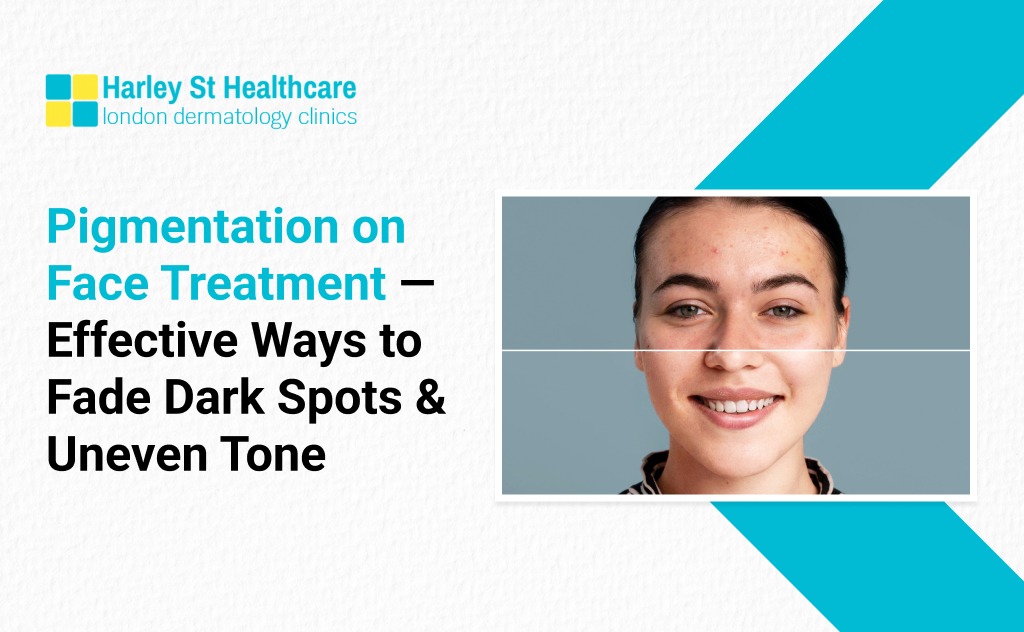
Understand what facial pigmentation is, why it happens, and expert-approved treatment options from peels and lasers to London dermatology care to fade dark patches safely and effectively.
What Is Facial Pigmentation?
Facial pigmentation (hyperpigmentation) refers to dark spots or uneven skin tone caused by excess melanin production. This can appear as:
- Sun spots
- Melasma
- Age-related spots
- Pigmentation after acne or inflammation
Think of the skin like a clean white sheet of paper; pigmentation is like a drop of ink that settles unevenly. Treatment is the careful removal or fading of this ink layer to restore clarity and balance.
Why Treating Pigmentation Matters
Unchecked pigmentation can deepen, spread, or become more resistant to treatment over time.
Professional care helps by:
- Improving complexion & brightness
- Boosting confidence and appearance
- Preventing further pigmentation
- Reducing long-term skin damage
- Enhancing skin texture with treatments like lasers & peels
Best Treatment Options for Pigmentation on the Face
Below are clinically recognised treatment methods recommended by dermatologists:
1. Topical Serums & Skincare
Useful for mild pigmentation or long-term maintenance.
Common ingredients:
| Ingredient | Benefit |
| Vitamin C | Brightens skin + reduces oxidative darkening |
| Kojic Acid | Suppresses melanin production |
| Niacinamide | Reduces inflammation + prevents new dark spots |
| Tranexamic Acid | Treats melasma and stubborn pigmentation |
Best for: Early-stage pigmentation, prevention, maintenance.
2. Chemical Peels
Chemical peels use acids like glycolic, salicylic or lactic acid to exfoliate the top skin layer, allowing pigmented cells to shed faster.
Benefits of peels:
- Visible brightening within 2–3 sessions
- Smooths uneven tone & texture
- Affordable compared to lasers
Best suited for superficial or moderate pigmentation.
3. Laser & Light-Based Treatments
Laser therapy (including IPL, Q-Switched, Nd:YAG) targets melanin deposits directly, breaking pigment clusters so the body can clear them naturally.
Ideal for:
- Deep pigmentation
- Melasma
- Stubborn, long-standing spots
Results typically improve significantly after 3–6 sessions.
4. Microneedling & PRP Therapy
Micro-injuries stimulate collagen, improve skin tone and gradually fade pigmentation. When paired with PRP or brightening serums, results intensify.
Best for: Pigmentation + acne scars + textural irregularities.
5. Lifestyle & Preventive Care
Some habits directly worsen pigmentation, especially UV exposure.
Daily SPF 30–50 is non-negotiable.
Hats, shade-seeking and avoiding peak UV hours can reduce recurrence dramatically.
Pigmentation Treatment Comparison
| Treatment Type | Best For | Sessions Needed | Downtime |
| Topical Serums | Mild pigmentation, prevention | Ongoing | None |
| Chemical Peels | Surface-level pigmentation | 3–6+ | Mild peeling/redness |
| Laser / IPL | Deep or stubborn pigmentation | 3–6 | Light sensitivity/redness |
| Microneedling / PRP | Pigmentation + texture issues | Multiple | Mild recovery days |
Which Pigmentation Treatment Is Best for You?
Consider:
- Depth & type of pigmentation
- Skin type & sensitivity
- Budget & expected speed of results
- Downtime availability
- Whether you want maintenance or quick clearing
If unsure, consult a dermatologist for a tailored plan.
Pigmentation Treatment in London: Where to Get It
If you’re looking for pigmentation treatment in London, clinics offer:
- Laser pigmentation reduction
- Chemical peel courses
- Microneedling + PRP
- Dermatologist-guided skincare plans
Local treatment provides personalised assessments, safer protocols for sensitive/darker skin, and structured progress monitoring, making it ideal for melasma or stubborn dark spots.
Searching for pigmentation treatment in London ensures expert-led care with advanced medical technology for faster, safer results.
Pro Tips for Faster Results & Mistakes to Avoid
Daily sunscreen application is the most important step
Patch-test new serums/peels before full-face use. Avoid over-exfoliating (can worsen pigmentation)
Follow aftercare strictly post-laser or peel. Maintain hydration, sleep & diet for better skin recovery
Patience matters most; pigmentation takes weeks to months to fade significantly.
Step-by-Step Treatment Approach
- Start with daily SPF + gentle brightening serum
- Identify pigmentation type (sunspots vs melasma vs PIH)
- For mild cases → serums + periodic chemical peels
- For deep pigmentation → lasers/IPL recommended
- Follow aftercare + avoid sun exposure strictly
- Maintain progress with skincare & routine peels/serums
Conclusion
Facial pigmentation is highly treatable with the right plan. Whether using skincare, chemical peels or advanced laser treatments, consistency and professional care make the biggest difference. Add daily sun protection and regular maintenance to prevent recurrence and achieve a visibly brighter, more even complexion.
For deeper or persistent dark spots, seeking pigmentation treatment from a London dermatologist ensures expert handling and faster, safer improvement.
FAQs
Can pigmentation be removed completely?
Yes, especially sunspots and PIH. Melasma can be controlled long-term with ongoing care.
How long do results take?
Serums = weeks to months.
Peels/lasers = noticeable change within 3–6 sessions.
Is a laser safe for dark skin?
Yes with specialist supervision & customised wavelength setting.
Will pigmentation return?
If sun exposure isn’t controlled, it may come back. Prevention is key.

