Call Us Now
Lines Open: 9am – 9pm | Mon – Sun
Award Winning
5-Star Rated Clinic
Rated 5 out of 5
Hyperhidrosis is a medical condition. It’s not anxiety. It’s not poor hygiene.
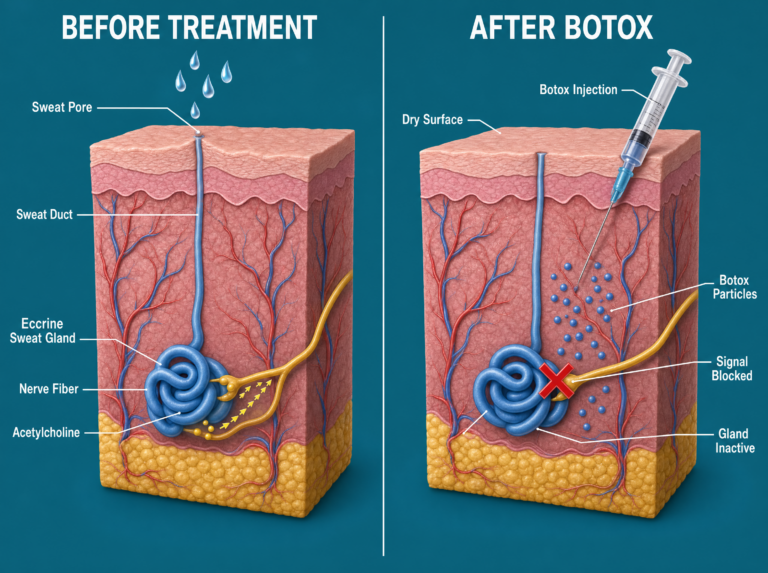
The sweat glands fire at the wrong nerve threshold, and standard antiperspirants can’t reach that level. The NHS approves botox to fix it under NICE guidance TA106.
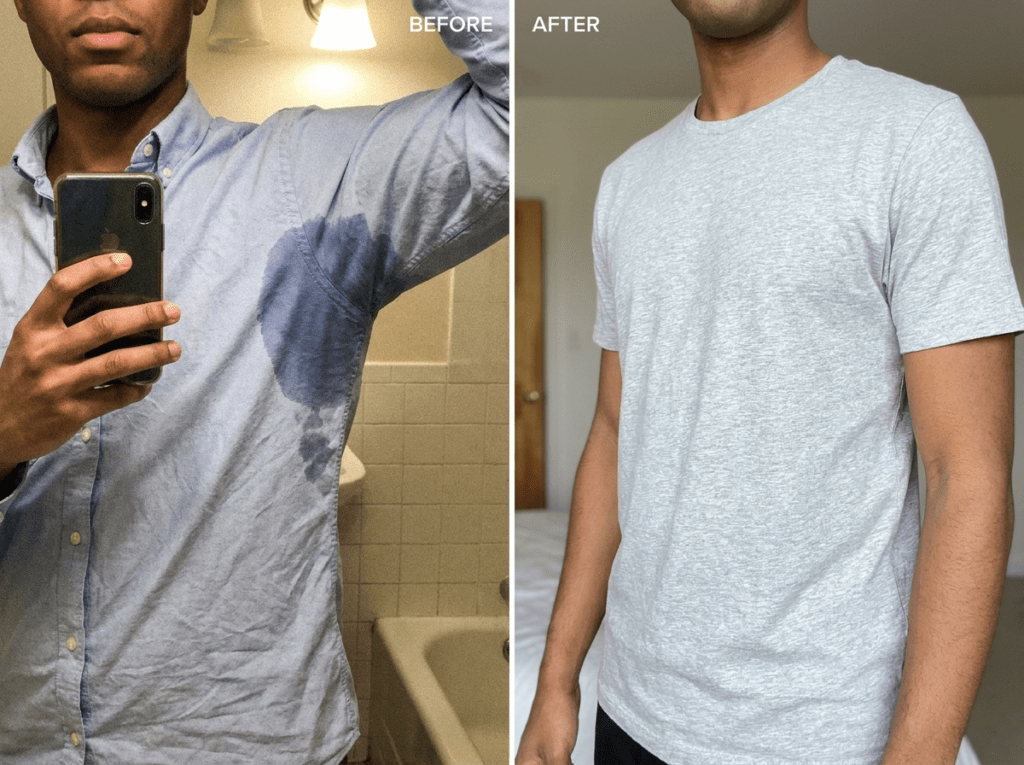
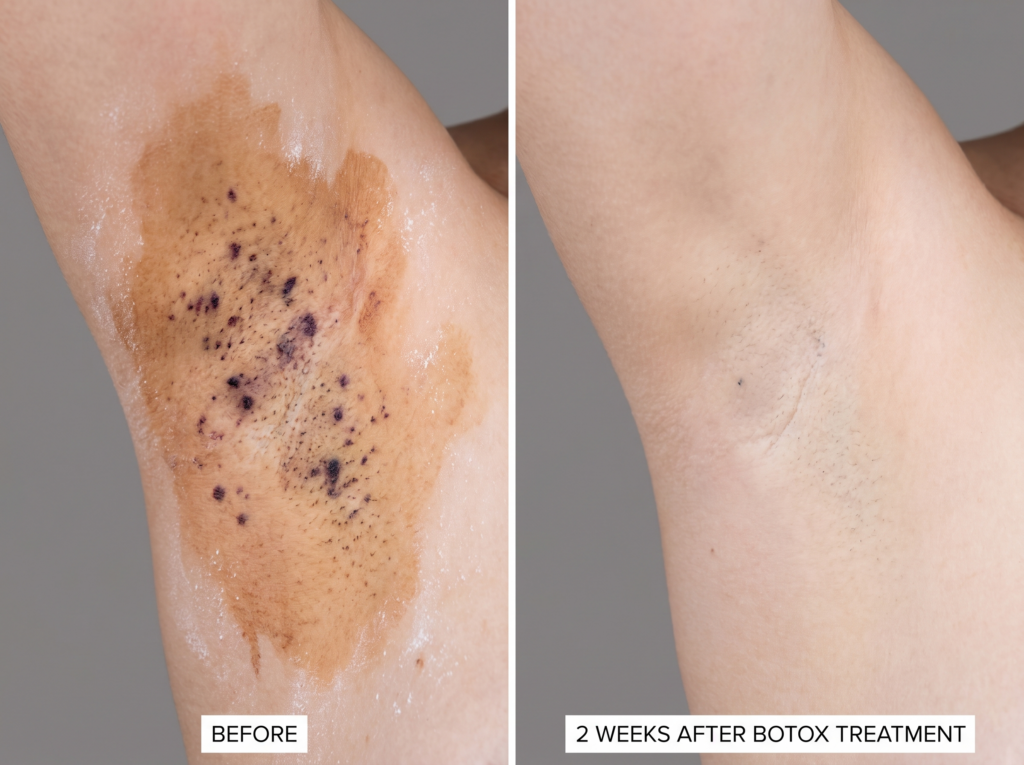
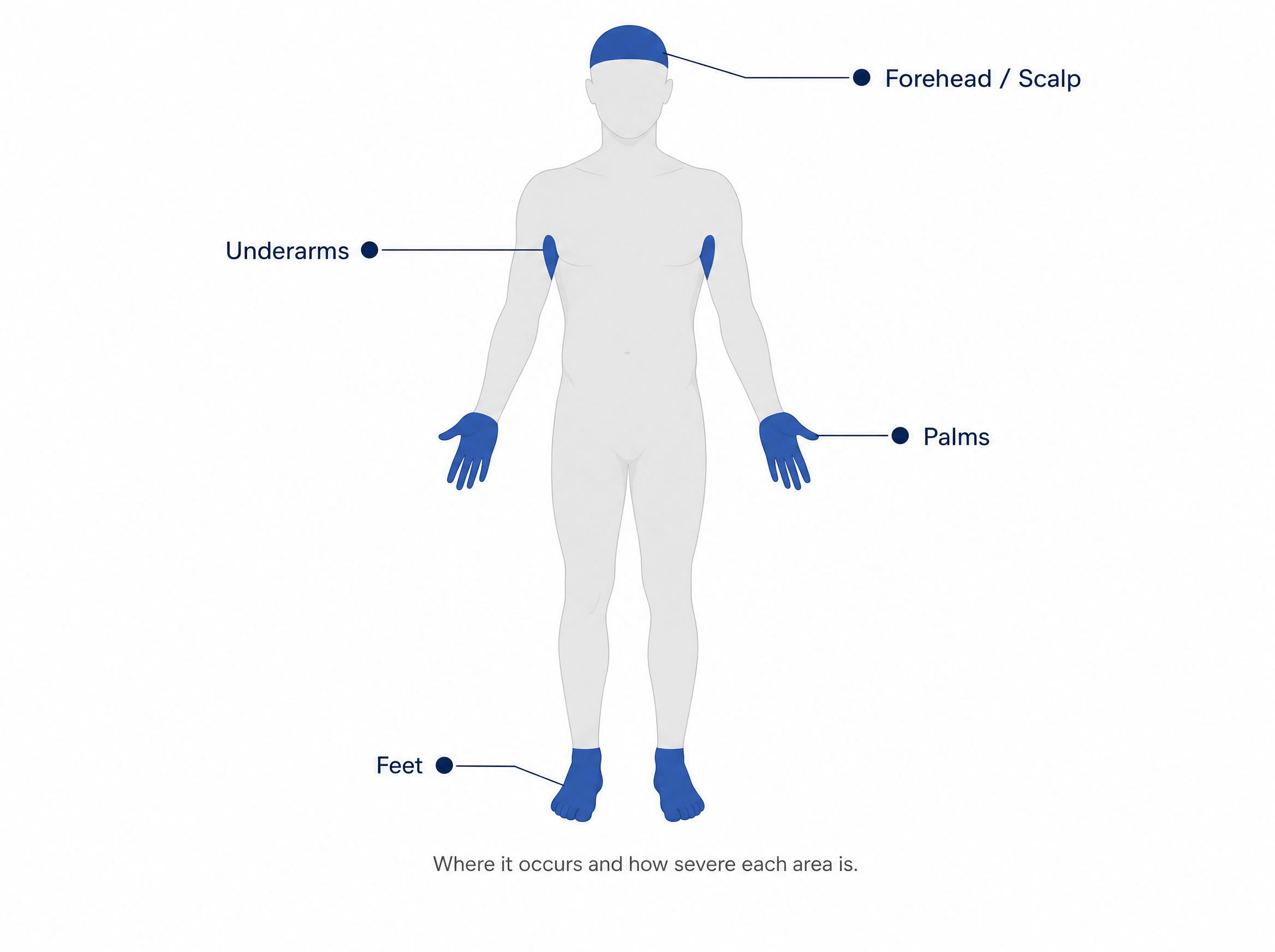
For axillary sweating that ruins shirts and ends meetings early. Results in 5-7 days. Lasts 4-6 months.
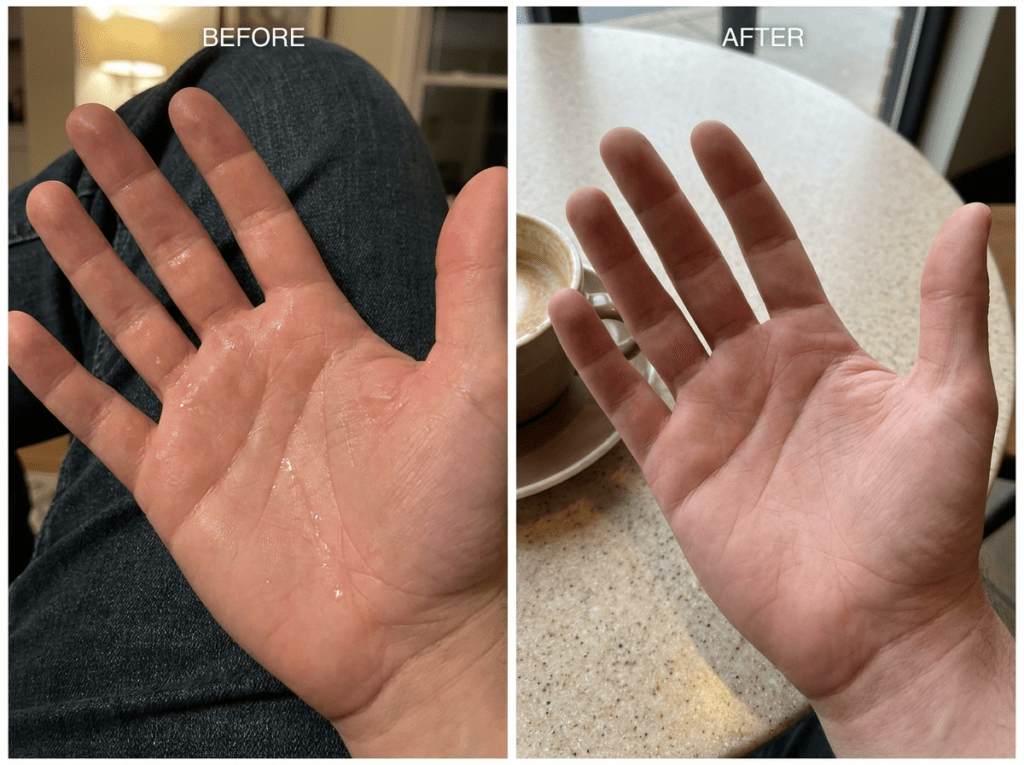
For palmar sweating that affects handshakes, grip, and touchscreens. Topical anaesthetic standard.
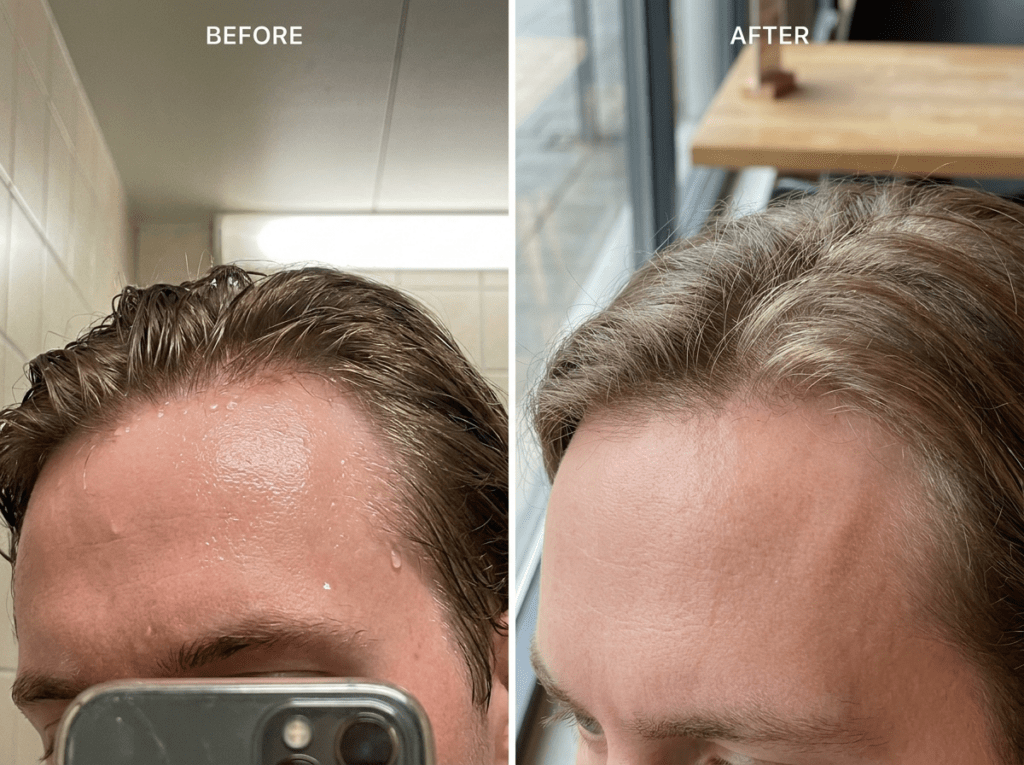
For forehead drips, hairline sweat, and visible facial sweating. Dosing mapped to your specific pattern.
Following a clinical assessment, our consultant dermatologist confirms whether Botox is right for your sweat pattern and walks you through the exact cost of your treatment. Underarm starts at £400. Palms, feet, face, and scalp from £450 to £500. Multi-area discounts are available.
In most cases, treatment can be done the same day as your consultation. The consultation itself is free, so there’s no financial risk to finding out if you’re a candidate.
If you would like to book an appointment for excessive sweating in London or have a question about treatment please call our friendly team today on 0207 030 3370.
Harley Street Healthcare is a CQC-registered medical dermatology clinic at 96 Harley Street. We’ve treated hyperhidrosis for over a decade, with proper clinical assessment and correctly dosed.
Your consultation is with a GMC-registered consultant dermatologist with 30+ years of clinical experience. Every assessment is medical-led from start to finish. Same-week appointments, open 9am to 9pm, 7 days a week.
Every patient starts with a 30-minute consultation. The dermatologist reviews your sweat pattern, severity, history, and previous treatments, then confirms whether hyperhidrosis is right for your case. No commitment to proceed.
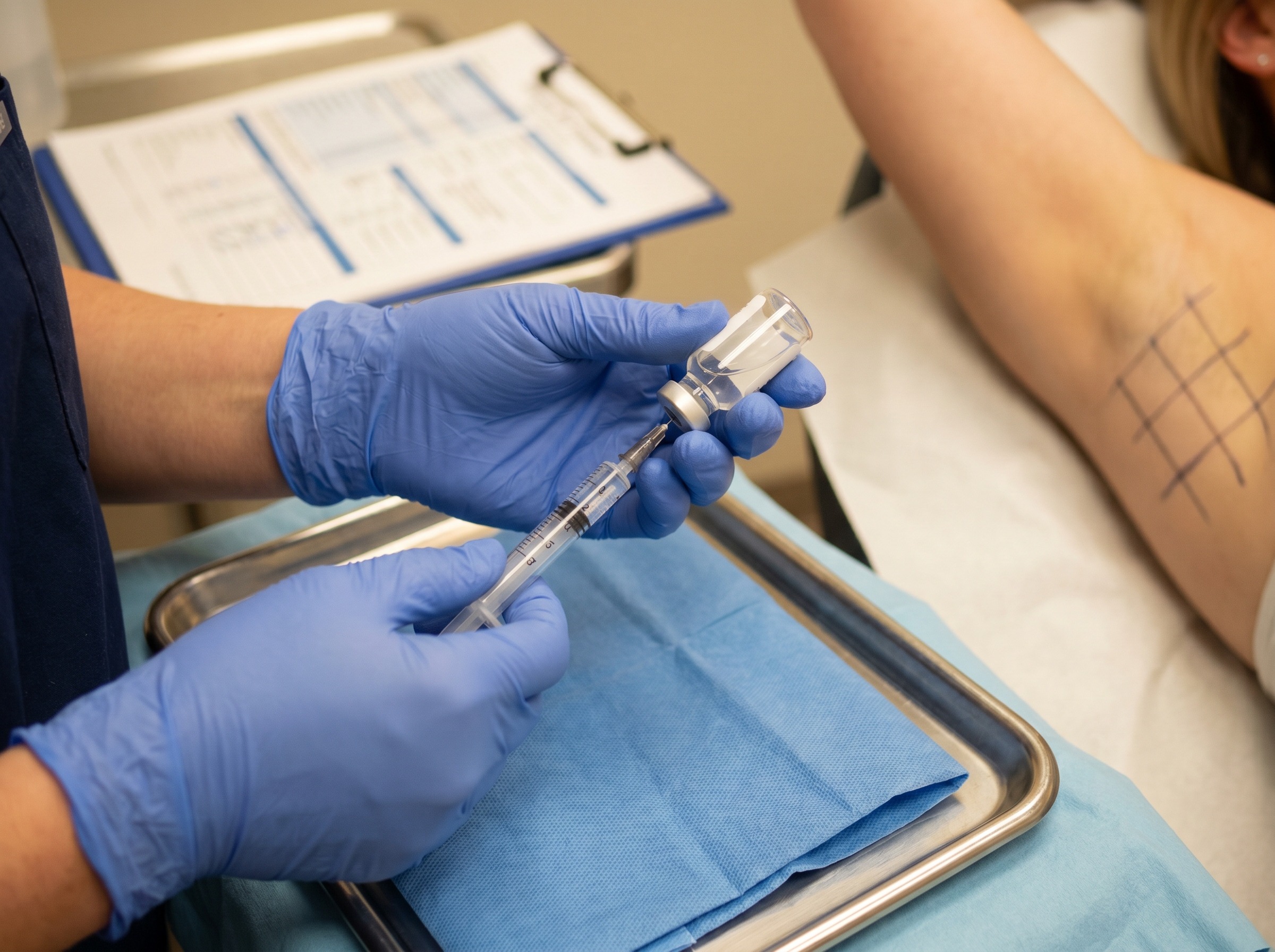
Solution is administered by a GMC consultant dermatologist with 30+ years of hyperhidrosis experience. Dosing is mapped to your specific affected areas, which is often the difference between full and partial response.