
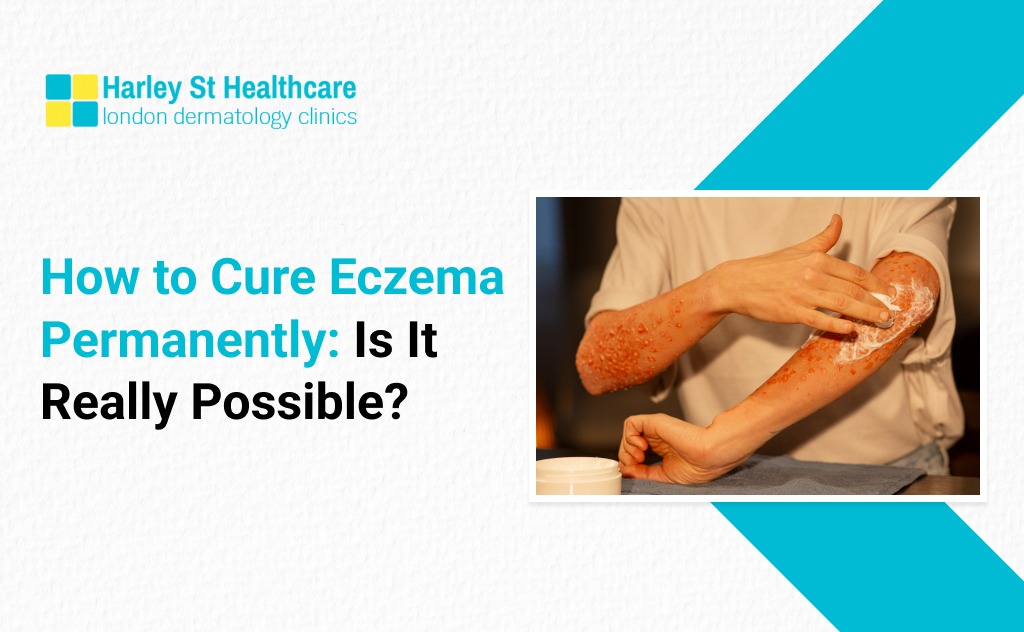
If you are searching how to cure eczema permanently, you are likely feeling exhausted by repeated flare-ups, constant itching, and temporary treatments that never seem to fully solve the problem. Eczema can be physically uncomfortable and emotionally draining. Many patients ask whether it can ever truly go away, or whether they will manage it for life.
The honest answer, based on current dermatology standards in the UK, is that eczema cannot usually be permanently cured, but it can be very effectively controlled. With the right treatment plan, many people achieve long periods of clear, comfortable skin.
What Is Eczema?
Eczema, most commonly atopic dermatitis, is a chronic inflammatory skin condition. It develops when the skin barrier is weakened and the immune system becomes over-reactive to triggers.
This leads to:
- Dry, cracked skin
- Redness and inflammation
- Persistent itching
- Oozing or crusting during severe flares
- Thickened skin in long-standing cases
Eczema often begins in childhood, but adult eczema is increasingly common in the UK.
Can Eczema Be Cured Permanently?
At present, eczema does not have a permanent cure.
It is considered a chronic condition linked to genetics, immune response, and skin barrier dysfunction. However, “chronic” does not mean constant suffering. With appropriate treatment, many patients experience:
- Long symptom-free periods
- Fewer flare-ups
- Improved sleep
- Better quality of life
The goal of dermatological care is long-term control, not temporary suppression.
Note for Patients: Many chronic skin conditions share similar symptoms but require different approaches. If you are unsure about your diagnosis, you may find our comparison helpful: Can Psoriasis Be Cured?
Why Does Eczema Keep Coming Back?
Many patients feel frustrated when eczema improves and then suddenly flares again.
Common triggers include:
- Cold or dry weather
- Stress
- Harsh soaps or fragranced skincare
- Dust mites
- Pet dander
- Certain fabrics such as wool
- Skin infections
Even when inflammation settles, the underlying barrier weakness remains. Without maintenance care, flares can return.
What Heals Eczema the Fastest?
During an active flare-up, inflammation must be reduced quickly and safely.
Dermatologists typically use:
Topical Corticosteroids
These reduce inflammation and itching effectively when used correctly. Strength and duration depend on the body area and severity.
Emollients (Medical Moisturisers)
Regular emollient use is essential. They repair the skin barrier and reduce flare frequency.
Calcineurin Inhibitors
These steroid-sparing creams may be used for sensitive areas such as the face or eyelids.
Fast improvement usually occurs when anti-inflammatory treatment and barrier repair are used together, not separately.
What Is the Best Long-Term Treatment for Eczema?
Long-term management focuses on prevention.
A structured eczema management plan may include:
- Daily fragrance-free emollients
- Trigger avoidance
- Short, controlled steroid courses during flares
- Maintenance therapy for recurrent areas
- Phototherapy in moderate cases
- Biologic therapy such as dupilumab for severe eczema
Treatment should follow recognised UK clinical standards, such as NHS and NICE guidance.
Is Eczema Permanent in Adults?
Some children “grow out” of eczema, particularly mild cases.
However, adult eczema can persist or even begin later in life. While it may not disappear entirely, severity often fluctuates. Many adults achieve stable control with consistent care.
Can Diet Cure Eczema?
Diet alone does not cure eczema.
True food allergies are more common in children with eczema than adults. Unnecessary food restriction can lead to nutritional imbalance.
If a food trigger is suspected, proper allergy assessment is recommended before eliminating foods. Self-diagnosed “eczema diets” rarely provide lasting improvement without medical confirmation.
Does Vitamin D Help Eczema?
Vitamin D plays a role in immune regulation.
Some studies suggest that correcting vitamin D deficiency may improve eczema severity in certain individuals, particularly in winter months. However, it is not a standalone cure.
Supplementation should be guided by medical advice rather than self-prescribing high doses.
Which Soap Is Good for Eczema?
Traditional soaps often worsen eczema because they strip natural oils from the skin.
For eczema-prone skin, dermatologists recommend:
- Soap substitutes
- Fragrance-free cleansers
- Non-foaming, gentle wash products
Harsh antibacterial washes, exfoliating scrubs, and fragranced shower gels should be avoided.
What Should You Not Put on Eczema?
Common irritants include:
- Essential oils
- Fragrance
- Alcohol-based products
- Undiluted apple cider vinegar
- Strong exfoliating acids
- Overuse of antiseptic products
Social media remedies may worsen inflammation and delay proper treatment.
What Is the “3-Minute Rule” for Eczema?
A commonly recommended principle is applying moisturiser within three minutes of bathing.
This helps lock in moisture before water evaporates from the skin. Immediate emollient use strengthens the barrier and reduces dryness throughout the day.
When Should You See a Dermatologist?
You should seek specialist advice if:
- Eczema is not responding to over-the-counter creams
- Sleep is regularly disturbed
- Skin is becoming infected
- You require frequent steroid use
- The condition is affecting confidence or mental wellbeing
Persistent or severe eczema may require advanced treatment options not available through routine self-care alone.
At London Dermatology Clinics, eczema management focuses on realistic control, trigger identification, and long-term skin stability rather than short-term quick fixes.
Final Thoughts
If you are searching how to cure eczema permanently, it often reflects fatigue and frustration. While eczema does not usually have a permanent cure, it can be managed extremely effectively.
With the right diagnosis, structured treatment plan, and ongoing maintenance, most patients achieve calmer, more comfortable skin and significantly fewer flare-ups.
The aim is not perfection, but predictable control and restored confidence.
Frequently Asked Questions (FAQs)
Mild eczema, particularly in children, may improve or resolve over time. However, many cases require ongoing management. Even if symptoms disappear, flare-ups can return if triggers are not controlled.
Common triggers include dry weather, stress, fragranced products, harsh soaps, dust mites, pet dander, infections, and skin irritation. Identifying and avoiding personal triggers helps reduce recurrence.
The fastest way to calm a flare is usually a short, prescribed course of topical corticosteroids combined with frequent use of fragrance-free emollients. Early treatment prevents worsening inflammation.
Eczema is not classified as a classic autoimmune disease, but it involves immune system dysfunction. The immune response becomes overactive, leading to inflammation and skin barrier damage.
Yes. Stress can trigger or worsen eczema by increasing inflammatory activity in the body. Managing stress alongside medical treatment can help improve long-term control.

