
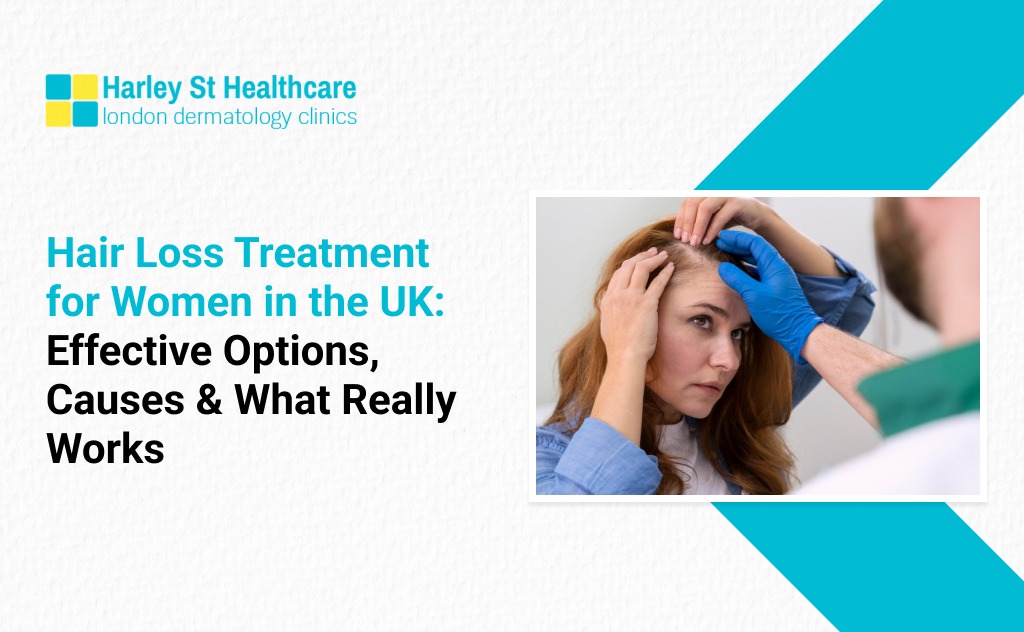
Hair loss in women can feel alarming but effective treatment is available
Hair loss in women is far more common than most people realise. Many women notice gradual thinning, increased hair shedding, or a widening part long before they ever describe it as “hair loss.” For some, it’s distressing and impacts confidence; for others, it raises fear about underlying health issues.
The reassuring news is this: most female hair loss is treatable, especially when the cause is identified early. In the UK, dermatologists follow evidence-based approaches aligned with NHS and NICE guidance, focusing on realistic outcomes rather than quick fixes.
This guide explains the best hair loss treatments for women in the UK, what actually works, and how to decide when professional help is needed.
What causes hair loss in women?
Female hair loss rarely has a single cause. Often, several factors overlap.
Common causes of female hair loss in the UK
Female Pattern Hair Loss (FPHL)
The most common cause. Hair gradually becomes finer over the crown and parting while the hairline usually stays intact. Genetics and hormones both play a role.
Telogen Effluvium
A temporary shedding condition triggered by stress, illness, surgery, weight loss, or childbirth. Many women notice large amounts of hair fall during washing or brushing.
Hormonal changes
Pregnancy, menopause, polycystic ovary syndrome (PCOS), and thyroid disorders can all affect hair growth cycles.
Nutritional deficiencies
Low iron, vitamin D, or protein intake can worsen shedding, especially in women with restrictive diets.
Scalp conditions
Inflammatory conditions such as seborrhoeic dermatitis or psoriasis may disrupt healthy hair growth.
Understanding the cause is essential because the best hair loss treatment for women depends entirely on the diagnosis.
When should a woman seek treatment for hair loss?
You should consider assessment if:
- Hair shedding lasts longer than 3–4 months
- The parting appears wider or thinner
- Hair density is visibly reduced
- Hair loss is affecting confidence or wellbeing
Early assessment often allows simpler, more effective treatment.
Hair loss treatment for women in the UK: what actually works?
1. Topical Minoxidil (clinically proven first-line treatment)
Topical minoxidil is one of the most effective and widely recommended hair loss treatments for women in the UK.
- Improves blood flow to hair follicles
- Prolongs the growth phase of hair
- Suitable for long-term use
Many women notice reduced shedding within 3–4 months, with visible improvement after 6–12 months. Initial shedding can occur this is normal and temporary.
2. Oral medications (specialist-led only)
In selected cases, dermatologists may consider oral treatments that influence hormones or hair cycling. These are prescription-only and require careful assessment, particularly for women of child-bearing age.
These treatments are not suitable for everyone, which is why professional guidance is essential.
3. Platelet-Rich Plasma (PRP) therapy
PRP uses your own blood platelets to stimulate hair follicles.
- Can improve hair thickness and density
- Often used alongside medical treatments
- Typically delivered in a course of sessions
PRP is not a miracle cure, but can be helpful for early-stage female pattern hair loss when expectations are realistic.
4. Addressing nutritional and medical factors
Correcting iron deficiency, thyroid imbalance, or vitamin deficiencies can significantly reduce shedding.
In the UK, dermatologists may recommend:
- Blood tests
- Dietary adjustments
- Medical referral when needed
Treating the underlying issue is often more important than cosmetic solutions.
5. Hair transplant surgery (carefully selected cases)
Hair transplants are not usually first-line treatment for women, but may be considered in specific patterns of hair loss with stable donor hair.
A thorough assessment is critical to avoid disappointment.
What is the best hair loss treatment for female patients in the UK?
There is no single “best” treatment for every woman.
In clinical practice, the most effective results come from a personalised combination, often including:
- Topical treatment
- Medical optimisation
- Lifestyle and scalp care
- Regular monitoring
The key difference between successful and disappointing outcomes is accurate diagnosis and realistic planning.
What results should women realistically expect?
Hair regrowth is slow. Most treatments:
- Reduce shedding first
- Improve thickness gradually
- Require ongoing use to maintain results
Many women aim not for “perfect hair,” but for visible improvement and confidence restoration a realistic and achievable goal.
Can lifestyle changes help female hair loss?
Lifestyle alone rarely reverses hair loss, but it supports treatment.
Helpful habits include:
- Managing stress and sleep
- Avoiding tight hairstyles
- Gentle hair care routines
- Balanced nutrition
These steps protect existing hair and improve scalp health.
When to see a dermatologist rather than self-treat
You should seek specialist advice if:
- Hair loss is progressing despite treatment
- Scalp symptoms (itching, redness, pain) are present
- Hair loss began suddenly or severely
- You’re unsure which treatment is safe for you
A dermatologist can confirm the diagnosis and guide safe, evidence-based treatment.
Hair loss treatment in London and across the UK
Women seeking hair loss treatment in London benefit from access to:
- Consultant dermatologists
- Advanced diagnostic tools
- Medical and non-surgical options
Reputable UK clinics follow GMC-regulated standards, ensuring ethical care and realistic advice.
Key takeaways
- Female hair loss is common and often treatable
- Early assessment improves outcomes
- The best hair loss treatment for women in the UK depends on the cause
- Combination therapy works better than one-size-fits-all solutions
- Professional guidance prevents wasted time and anxiety
FAQs Hair Loss Treatment for Women UK
Is hair loss in women permanent?
Not always. Many types of female hair loss are reversible or manageable, especially when treated early.
How long does hair loss treatment take to work?
Most treatments take 3–6 months to reduce shedding and 6–12 months for visible improvement.
Is minoxidil safe for women in the UK?
Yes, when used correctly. It is one of the most researched and recommended treatments for female hair loss.
Can stress cause hair loss in women?
Yes. Stress can trigger telogen effluvium, a temporary shedding condition that usually improves over time.
Do I need blood tests for hair loss?
Often yes. Blood tests help identify iron deficiency, thyroid issues, or hormonal imbalances that may contribute to hair loss.

