
Eczema and psoriasis are some of the most prevalent chronic skin diseases but most people have a hard time knowing the difference between them. They both result in redness, itchiness, dryness, and inflammation, making self-diagnosis a confusing task, and resulting in slow or wrong treatment.
The critical difference is found in their etiology, presentation on the skin, and the response to therapy. Although eczema can be associated with allergies and environmental factors, psoriasis is an autoimmune disease that is triggered by the excessive cell proliferation of skin.
In this guide, the difference between eczema and psoriasis is described along with the symptoms, causes, appearance, and treatment as well as when to consult a dermatologist.
This guide includes their description, their mechanism of operation, difference, the advantages of diagnosing in early life, types, risks, comparisons, and frequently asked questions by people.
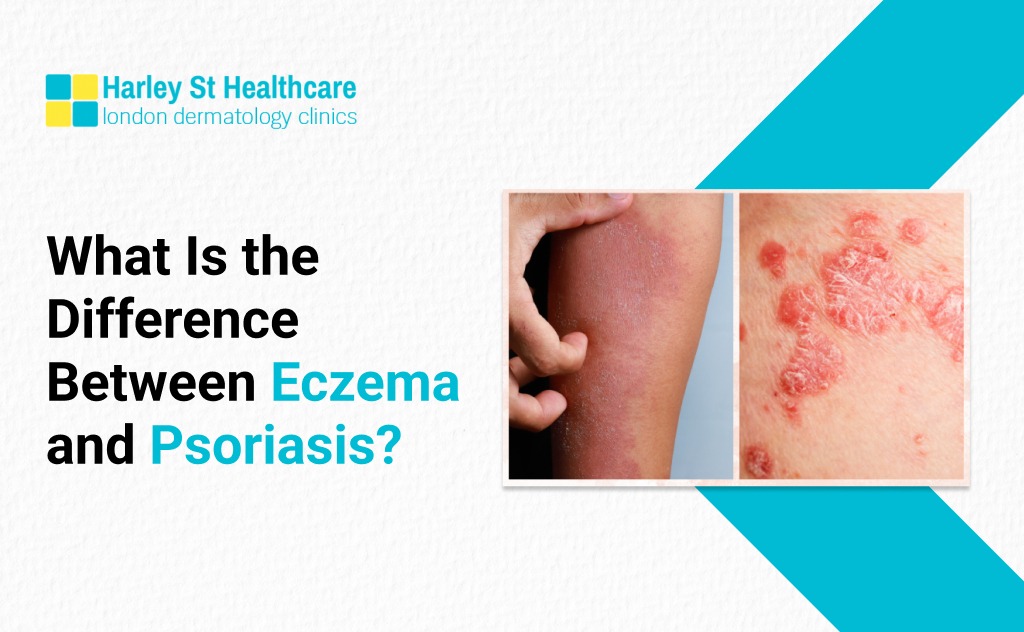
What Is Eczema?
Eczema (atopic dermatitis) is a long-term inflammatory disorder of the skin, resulting in severe itchiness, dryness, and rashes because of the deficiency of the skin barrier.
Key attributes
- Brought on by allergies, irritants or dry skin.
- Often starts in childhood
Types of Psoriasis
- Plaque psoriasis
- Guttate psoriasis
- Inverse psoriasis
- Pustular psoriasis
- Erythrodermic psoriasis
- Nail psoriasis
- Scalp psoriasis
What Is Psoriasis?
Psoriasis is an autoimmune disease in which the immune system accelerates growth of skin cells resulting in thick and scaly patches.
Key attributes
- There is a 10 times faster build-up of skin cells.
- Chronic and immune-driven
Types of Eczema
- Atopic dermatitis
- Contact dermatitis
- Dyshidrotic eczema
- Nummular eczema
- Seborrheic dermatitis
- Stasis dermatitis
Psoriasis is an autoimmune disease in which the immune system accelerates growth of skin cells resulting in thick and scaly patches.
Key attributes
- There is a 10 times faster build-up of skin cells.
- Chronic and immune-driven
Types of Eczema
- Atopic dermatitis
- Contact dermatitis
- Dyshidrotic eczema
- Nummular eczema
- Seborrheic dermatitis
- Stasis dermatitis
Psoriasis is an autoimmune disease in which the immune system accelerates growth of skin cells resulting in thick and scaly patches.
Key attributes
- There is a 10 times faster build-up of skin cells.
- Chronic and immune-driven
Types of Eczema
- Atopic dermatitis
- Contact dermatitis
- Dyshidrotic eczema
- Nummular eczema
- Seborrheic dermatitis
- Stasis dermatitis
Why It Matters
- It is usually misdiagnosed due to similarity in the symptoms.
- Therapies vary greatly.
- The early diagnosis helps to avoid infection, exacerbation, and scarring.
- Assists patients in selecting appropriate care that is recommended by the dermatologist
How They Work-
| Factor | Eczema | Psoriasis |
| Cause | Skin barrier weakness + allergens | Autoimmune overactive immune system |
| Cell growth | Normal rate | 10x faster |
| Main symptom | Intense itching | Thick scaling & redness |
| Relief response | Moisturizers & steroids | Immunotherapy & biologics |
Key Benefits of Knowing the Difference
- Minimizes the misuse of medication.
- Prevents exacerbation of flare-ups.
- Helps select the right course of action.
- Enhances long-term skin treatment.
- Reduces infection risk
- Firms mental health confidence.
Common Challenges
- Google-based self-diagnosis.
- Application of incorrect creams worsens the situation.
- Thinning skin can be brought about by the misuse of steroids.
- Stress-induced and seasonal flare-ups.
Comparison Table
| Difference Point | Eczema | Psoriasis |
| Appearance | Red, dry, cracked patches | Thick silvery scales |
| Itching | Very intense | Mild to moderate |
| Location | Face, neck, hands, creases | Scalp, elbows, knees |
| Triggers | Allergies, soaps, weather | Stress, infections, genetics |
| Age onset | Childhood | Adulthood |
| Feel | Rough & oozing | Raised & scaly |
How to Identify
- Look at location of rashes
- Surface texture of checks (rough vs scaly)
- Note itching intensity
- Monitor post trigger symptoms.
- Review family history
- Note reaction to moisturizer
Expert Tips
- Do not suppose that images on the internet are like yours.
- Patch test prior to new products use.
- Recording flare-up triggers in a diary.
- Wet skin per day to avoid cracking.
Conclusion
Learning about the difference between eczema and psoriasis will make it easier to recognize the symptoms early and select an appropriate treatment regimen. Whereas eczema is precipitated by the effect of allergens and irritants, psoriasis occurs as a consequence of an autoimmune reaction. In case of the persistence of the symptoms or those impacting everyday life, the consultation of the dermatologist is guaranteed to diagnose and treat personally.
FAQ’s
1. How do you know if you have psoriasis or eczema?
Differentiation can be done by appearance, location and intensity of itching. Eczema results in red, dry and cracked skin which is very itchy and commonly in folds of the skin such as the elbows and behind the knees. Psoriasis creates thickened, elevated formations that have silvery scales usually on the head, elbows and knees and can cause burns or even stings rather than itch. The best method of confirming the diagnosis is a dermatologist exam.
2. What is the 3-minute rule for eczema?
The 3-minute rule implies the use of moisturizer within 3 minutes. This helps to avoid water loss, fixes the skin barrier and decreases flare-ups. Dermatologists suggest to use thick creams or ointments, rather than lotions, in order to seal most of the moisture.
3. What is the best cream for psoriasis or eczema?
The existence of the best cream does not exist because the treatment is based on the severity and skin type. In the case of eczema, it is usually recommended to use thick moisturizers, ceramide creams, petroleum-based ointments, and topical steroids. In the case of psoriasis, scales and inflammation can be treated with medicated creams containing coal tar, salicylic acid, vitamin D analogs or corticosteroids. It is important to always consult a dermatologist before using strong medicated products.
4. What is the main cause of psoriasis?
Psoriasis is mainly caused by an over active immune system which accelerates the proliferation of skin cells. Genetics, infections, stress, cold weather and certain medications can trigger flare-ups. It is not contagious and may be familial in nature.

